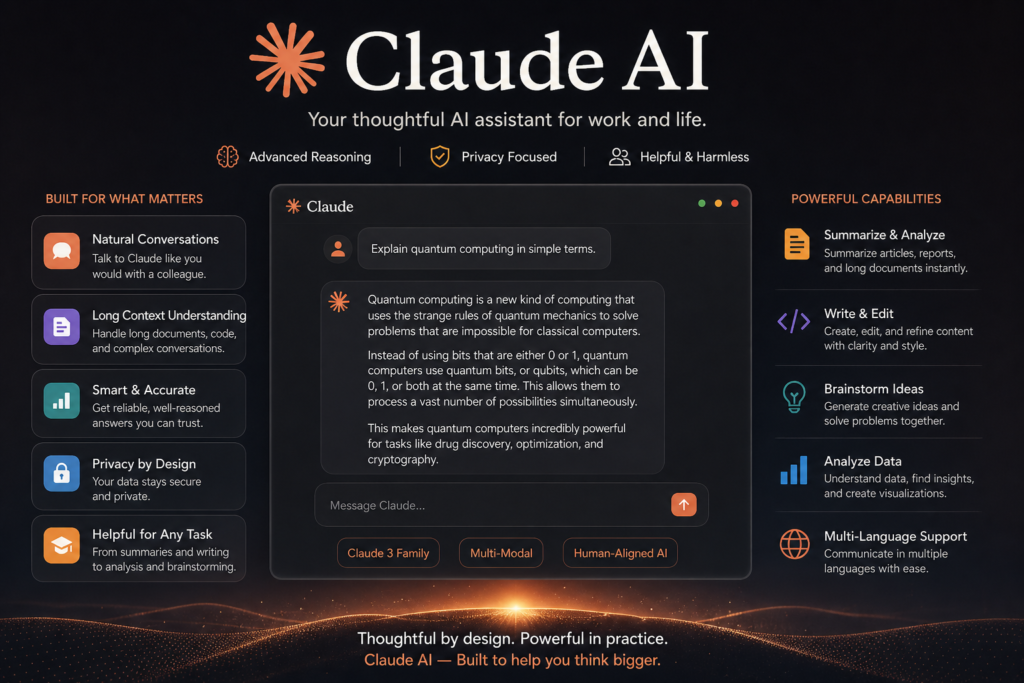
Claude AI has quickly become a popular choice for businesses looking to modernize operations. Built by Anthropic, it can handle everything from document creation and coding to multi-step analysis. Its adoption is growing fast—especially among companies exploring AI-driven SEO and digital marketing. But there’s a gap between what Claude can do in demos and how it performs in real business environments.
Most challenges aren’t about missing features. They come from mismatched expectations, workflow design issues, and a limited understanding of how the model actually works. Businesses that recognize and address these challenges early are far more likely to get long-term value.
When Complex Workflows Hit Context Limits
One of the biggest limitations in real-world use is Claude’s context window—the amount of information it can remember in a session. For simple tasks, this isn’t an issue. But in long, multi-step workflows, it becomes a serious constraint.
As conversations grow, earlier instructions and context can drop off. Claude doesn’t warn you—it simply continues without that information. This can lead to:
- Inconsistent responses
- Missed instructions
- Contradictions in output
For teams building complex systems—like reporting pipelines, content operations, or automation workflows—this can quietly break processes. The practical fix? Avoid building everything in one long thread. Break workflows into smaller, structured steps.
Safety Filters That Can Limit Professional Use
Claude is known for strong safety controls, which is a big advantage in regulated industries. But those same filters can sometimes block legitimate business use cases. Teams in legal, finance, HR, and compliance often face this issue. For example, tasks like:
- Reviewing sensitive contracts
- Modeling risk scenarios
- Drafting policy language
…may result in overly cautious or incomplete responses. While the intent is safety, the result can be:
- Slower workflows
- Repeated prompting
- Reduced trust in the tool
This isn’t unique to Claude, but it’s more noticeable due to its strict safety design. Businesses need to adjust how they frame prompts and set expectations accordingly.
The Overlooked Skill Gap
One of the biggest challenges has nothing to do with the AI itself—it’s how people use it. Claude performs only as well as the input it receives.
- Clear, structured prompts → high-quality output
- Vague prompts → vague results
Many businesses underestimate how much skill is involved in prompting effectively. Without proper guidance, teams may assume the tool “doesn’t work,” when in reality, it’s a usage issue. Organizations that invest in prompt training early see much better results and smoother adoption.
Reliability Issues During Peak Usage
Like most large AI platforms, Claude’s performance can vary—especially during high demand. You may notice:
- Slower response times
- Less consistent output quality
For time-sensitive tasks—like publishing content or supporting customers—this creates real risk.
Relying on peak performance without planning for slowdowns can disrupt workflows at critical moments.
Unclear Usage Limits and Model Changes
Predictability matters in business environments—but Claude can sometimes fall short here.
Usage Limits
Even on paid plans, limits aren’t always clearly defined. This makes it harder for teams to:
- Plan workloads
- Manage usage
- Control costs
Model Updates
Claude’s behavior can change between updates—tone, structure, or response style—without detailed explanations. For businesses using it in client-facing or standardized processes, this can create inconsistencies. Greater transparency would make it more enterprise friendly.
Integration Gaps Increase Manual Work
Compared to some platforms, Claude’s integration ecosystem is still developing. Connecting it with tools like:
- CRM systems
- Project management platforms
- Databases
- Automation tools
…often requires manual work or third-party solutions. For smaller teams, this adds overhead and reduces efficiency—especially when workflows are meant to be automated.
Building a Smarter AI Adoption Strategy
Despite these challenges, Claude remains a powerful tool—when used strategically.
Businesses already investing in AI-driven SEO, conversion optimization, and structured workflows tend to get the most value. The key is preparation. Successful teams:
- Understand context limitations
- Train teams on prompting
- Build workflows step-by-step
- Plan for performance variability
These decisions happen before implementation—and they make all the difference.
Final Thoughts
Claude AI is not a shortcut—it’s a system that needs the right setup to deliver consistent results. The challenges discussed here aren’t reasons to avoid it. They’re signals that thoughtful planning is required. Businesses that approach AI with structure and clarity tend to see long-term success. Those that don’t often struggle after the initial excitement fades.
In the end, it’s not just about using AI—it’s about using it well.





 post by