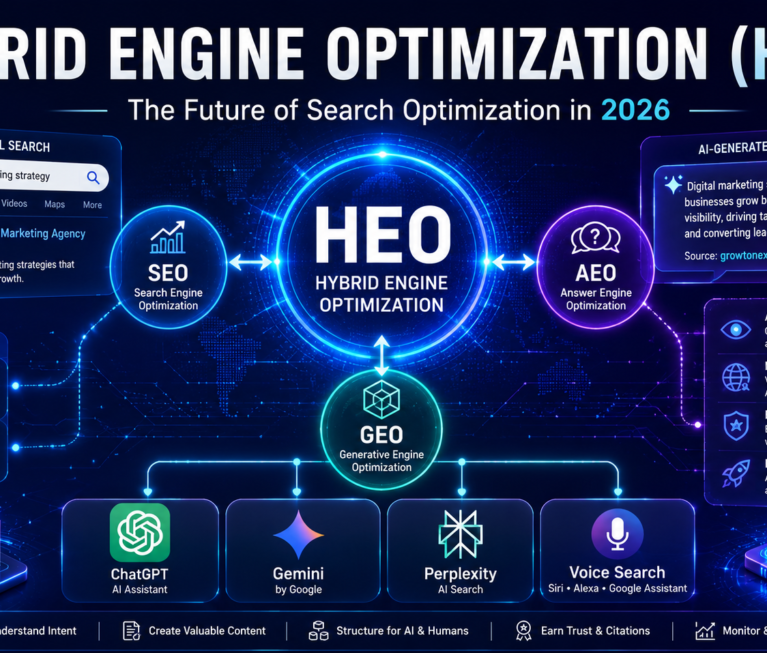
Every day, Google handles over 8.5 billion searches—and in 2026, AI plays a major role in deciding what users see.
SEO today is very different from what it was just a few years ago. Search engines are no longer just matching keywords to web pages. They now understand context, user intent, and overall content quality. AI-driven SEO isn’t just a trend anymore—it’s the foundation of how search rankings work. And businesses that haven’t adapted are slowly falling behind.
Search Intent Matters More Than Keywords
Gone are the days of keyword stuffing. Modern search systems focus on why someone is searching, not just what they type.
Google’s AI models, including its Search Generative Experience, prioritize content that clearly answers user questions. Pages overloaded with keywords but lacking real value tend to rank poorly. On the other hand, content that explains a topic thoroughly and naturally performs much better.
The shift is simple: instead of targeting keywords, focus on solving problems.
AI Content Needs Human Insight
AI tools like ChatGPT and Gemini can generate content quickly—but speed alone isn’t enough.
In 2026, Google’s ranking systems are advanced enough to detect shallow, repetitive, or generic content. That’s where the E-E-A-T framework (Experience, Expertise, Authoritativeness, and Trustworthiness) comes in. Content that lacks real-world experience or credibility struggles to rank.
To stand out, your content needs a human touch—original insights, real examples, and genuine expertise that AI alone can’t replicate.
Voice and Conversational Search Are Growing Fast
Search behavior is changing. More than half of all searches are now voice-based or conversational.
Instead of typing short phrases, users ask complete questions. For example, someone might search:
“Who is the best truck accident lawyer near me?”
instead of just typing “lawyer Van Nuys.”
This means your content should be written in a natural, question-and-answer style that matches how people actually speak.
Technical SEO Is Still Critical
Even with all the focus on content, technical SEO hasn’t gone anywhere—it’s more important than ever.
AI-powered crawlers now analyze websites more deeply, looking at things like:
- Page speed
- Mobile responsiveness
- Site structure
Elements like structured data, smart internal linking, and clean architecture help search engines understand your content better. Ignoring technical SEO can limit your visibility, no matter how good your content is.
Common SEO Questions in 2026
Does keyword research still matter?
Can Google detect AI-written content?
What is AI Overview?
How important is structured data?
Adapt or Fall Behind
SEO in 2026 rewards those who focus on people first—not just search engines.
Old tactics from a few years ago can actually hurt your rankings today. Success now depends on creating high-quality content, maintaining strong technical foundations, and demonstrating real expertise.
The businesses winning in SEO aren’t producing more content—they’re producing smarter content. Content that aligns with how AI understands information and how users search for it.
The bottom line: SEO is no longer about ticking boxes. It’s about building trust—with both users and search engines.




 post by